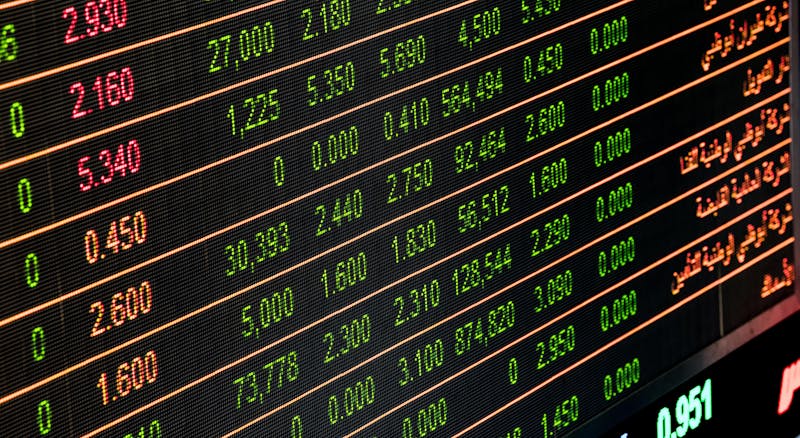
The stock market can look intimidating from the outside — tickers scrolling across screens, traders talking about "puts" and "spreads", headlines screaming about crashes. But underneath the noise, the basic idea is simple: companies sell small ownership stakes called shares, and you can buy them.
What Is a Stock?
When a company wants to raise money, it can sell pieces of itself to the public. Each piece is called a share (or stock). If a company issues 1,000 shares and you buy 10, you own 1% of that company. If the company grows and becomes more valuable, your shares are worth more. If it struggles, they're worth less.
Owning shares also sometimes entitles you to dividends — a portion of the company's profits paid out to shareholders, usually quarterly.
How the Stock Market Works
The stock market is simply the marketplace where buyers and sellers exchange shares. Major stock exchanges include:
- NYSE (New York Stock Exchange) — the world's largest by market cap
- NASDAQ — home to most major tech companies
- LSE (London Stock Exchange) — the UK's primary exchange
You don't visit these exchanges physically. Instead, you use a broker — an app or platform that executes trades on your behalf. Modern brokers like Robinhood, Trading 212, or Interactive Brokers let you buy shares from your phone in seconds.
Why Do Stock Prices Move?
Prices change because of supply and demand. More buyers than sellers? Price goes up. More sellers than buyers? Price goes down. What drives that buying and selling?
- Earnings reports — companies publish profits quarterly. Beat expectations, price rises. Miss, price falls.
- News and sentiment — product launches, lawsuits, CEO changes, geopolitical events all move prices.
- Interest rates — when rates rise, safer assets like bonds become more attractive, so stocks often fall.
- Market-wide trends — in a bull market, almost everything rises. In a bear market, almost everything falls.
How Do You Make Money?
There are two ways:
- Capital appreciation — you buy at £10, price rises to £15, you sell and pocket the difference.
- Dividends — some companies pay you a share of profits just for holding the stock.
The flip side is also true: prices can fall, and you can lose money. This is why understanding your risk profile matters before you invest a single pound.
Index Funds vs Individual Stocks
Beginners often debate whether to pick individual stocks or invest in an index fund. An index fund tracks a basket of stocks — the S&P 500, for instance, tracks the 500 largest US companies.
The data strongly favours index funds for most people: over 80% of actively managed funds underperform the S&P 500 over 10 years. For beginners, a low-cost index fund removes the stress of stock-picking and provides instant diversification.
That said, if you want to research individual companies and build a focused portfolio, tools like Indikators can help you analyse signals and track analyst sentiment.
Key Numbers to Know
- P/E ratio (Price-to-Earnings) — how much you pay for each £1 of company earnings. A P/E of 25 means you're paying £25 for every £1 of annual profit.
- Market cap — total value of all shares. Large-cap (>£10bn), mid-cap (£2–10bn), small-cap (<£2bn).
- 52-week high/low — the range a stock has traded in over the past year, useful context for where the current price sits.
- Volume — how many shares traded today. High volume usually means a meaningful price move.
Getting Started: A Simple First Step
- Open a brokerage account (ISA accounts in the UK are tax-efficient).
- Fund it with only money you can afford to leave untouched for at least 3 years.
- Start with a broad index fund (e.g. a S&P 500 tracker) to get comfortable.
- Learn to read basic signals and charts as you go — see our guide to BUY/SELL/HOLD signals.
There's no perfect entry point. The best time to start investing was 10 years ago. The second best time is today.